

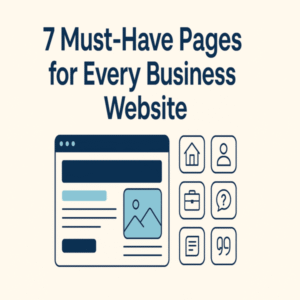
Launching a new business website is exciting — but overwhelming. Many owners wonder: What pages should my website include to look professional and actually bring in customers? The truth is, a well-planned website structure for business builds trust, improves SEO, and guides visitors toward action. In this article, we’ll walk through the 7 must-have website pages every business needs, no matter the industry.

1. Home Page – Your Digital First Impression
Your homepage is often the first stop for potential customers. It should:
Clearly explain what you do and who you help.
Feature your value proposition in a bold headline.
Guide users with strong calls-to-action (CTAs).
Think of it as your digital storefront — clean, welcoming, and designed to convert.
2. About Page – Build Trust Through Your Story
People connect with people, not just brands. An About page introduces your company, team, and mission. Share:
Your business journey.
The problems you solve.
A personal touch (photos, founder’s note).
This page builds credibility and turns casual visitors into loyal clients.
3. Services (or Products) Page – Show What You Offer
Whether you provide local services or sell products online, dedicate a page to highlight them. Use:
Clear categories.
Descriptive details.
Benefits, not just features.
Strong service/product pages are crucial in business website pages because they directly drive leads and sales.
4. Contact Page – Make It Easy to Reach You
A business website is useless if customers can’t connect with you. Include:
Contact form.
Phone number & email.
Map & address (if local).
Links to social media.
Pro tip: Add a clear CTA like “Request a Free Quote” or “Book a Consultation Today.”
5. FAQ Page – Answer Common Questions
An FAQ saves you time and reassures customers. Cover:
Pricing basics.
Service areas.
Policies (returns, guarantees, timelines).
Bonus: FAQs improve SEO by capturing voice search queries like “How much does [service] cost near me?”
6. Testimonials/Reviews – Social Proof That Sells
Customers want proof before choosing you. Showcase:
Client testimonials.
Case studies.
Before/after photos.
Positive reviews build trust and influence decision-making — one of the most persuasive must-have website pages for conversion.
7. Blog (or Resources) – Educate and Attract Visitors
A blog boosts visibility on Google and positions you as an expert. Share:
Helpful guides.
Industry news.
Tips that solve customer problems.
This ongoing content strategy grows traffic and gives prospects a reason to return.
Conclusion – Build a Website That Works for Your Business
A professional website isn’t just design — it’s structure. By including these 7 must-have business website pages, you’ll create a site that:
Builds trust.
Attracts leads.
Converts visitors into customers.
👉 Ready to plan your website structure and bring it to life? Contact me today to build a business website that works for you.